
artist/ Léo Caillard
France

Léo Caillard lives and works in Paris. After graduating from Les Gobelins in 2006, he moved to the United States shortly thereafter to study the New York art scene.
In 2009, he began his first artistic projects centered on the concept of time. Initially, these focused on the digital realm and our fleeting relationship with images. Two years later, he created his most significant series, “Hipsters in Stone,” in which he dresses classical sculptures on display at the Louvre in contemporary styles. The idea is to better understand the connection that can exist between these two eras—so different and yet so close in the context of our civilization. Society changes, but the great human questions remain. It is this conviction that lies at the very heart of Léo Caillard’s work.
Over the past five years, he has become increasingly interested in museum work and regularly participates in renowned institutional exhibitions.
In March 2018, he took part in the “Classical Now” exhibition at King’s College London, alongside major artists such as Marc Quinn and Damien Hirst. There, he installed two monumental sculptures at the North Entrance of King’s College. He regularly exhibits his work in various shows: at the MACM in Mougins, at the Musée Saint Raymond in Toulouse (alongside Jeff Koons and Xu Zhen), at Castletown in Dublin, in Tübingen, Germany, and at many other venues to come in 2021.
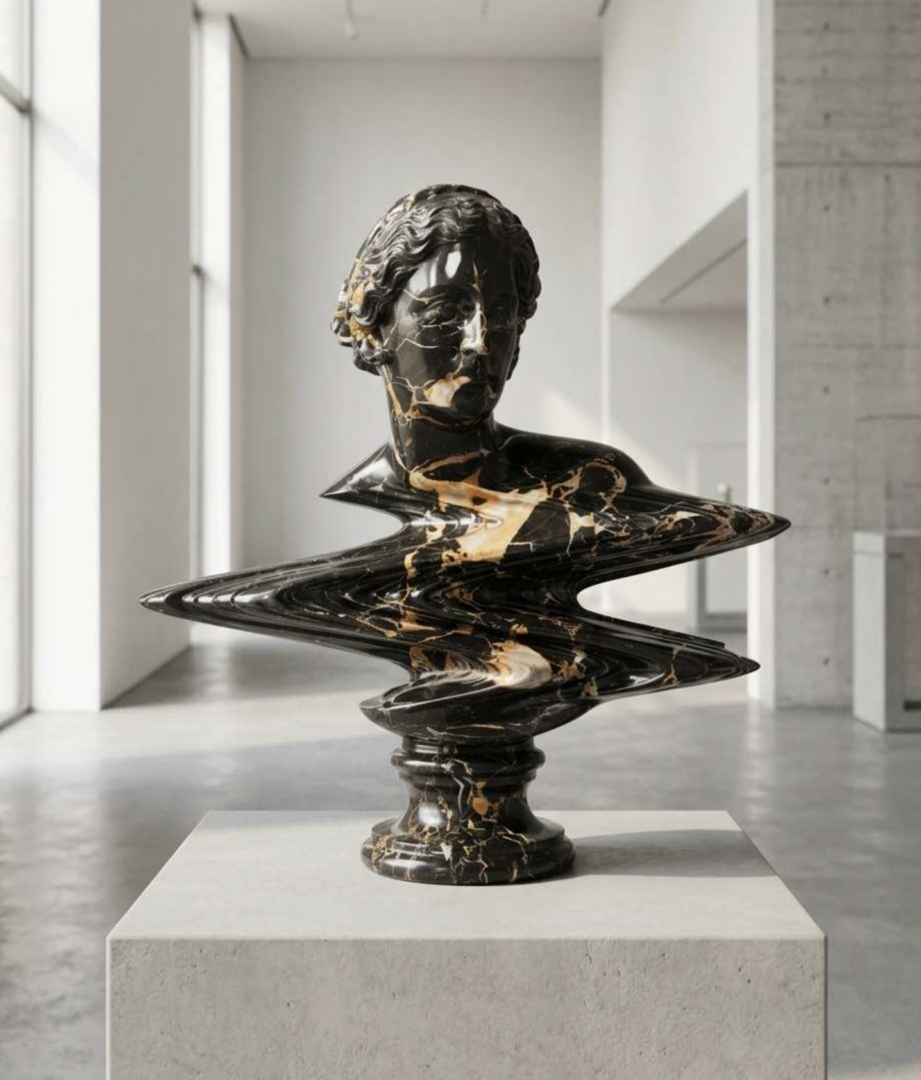
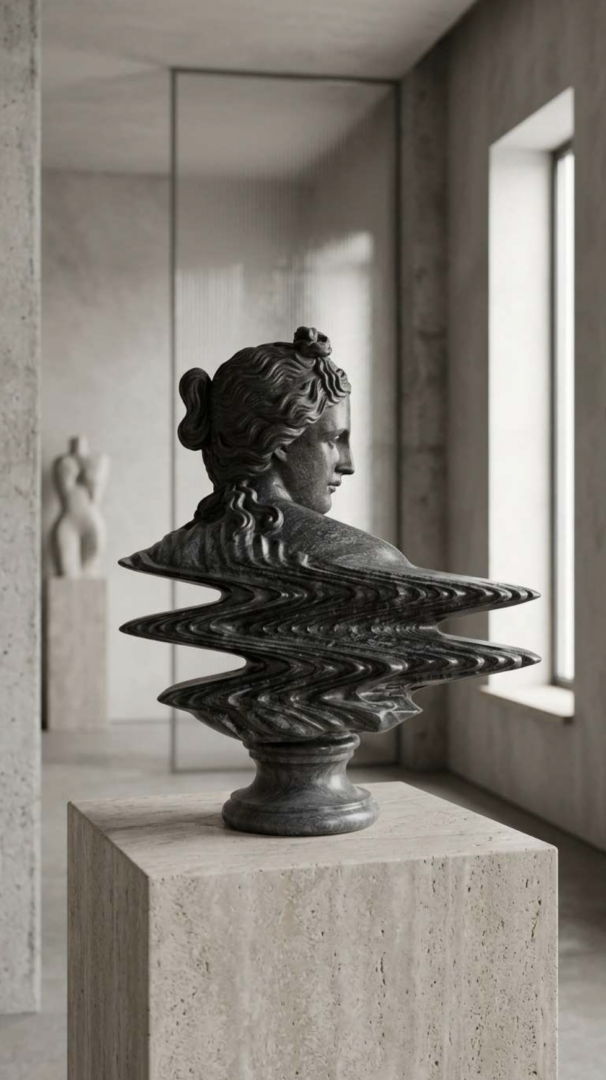
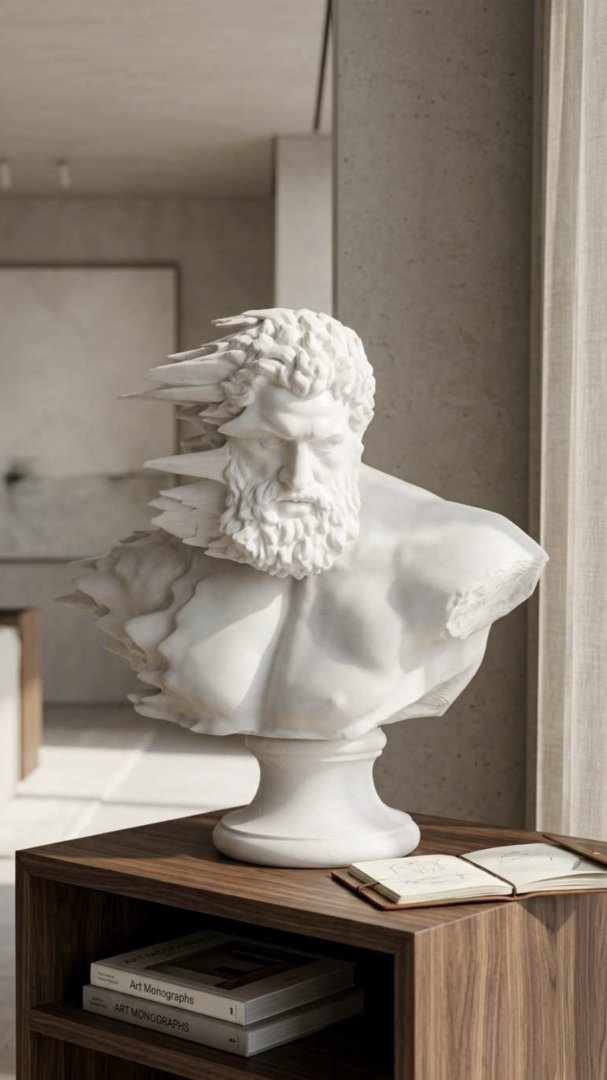
At the same time, new works are emerging, primarily centered on marble sculpture, which he places in dialogue with contemporary elements such as neon and augmented reality. A dialogue between stone and light, presence and absence, the tangibility of marble and the immateriality of the digital. A unique and singular way of observing our era through the lens of time.
In 2024, he reached a new stage in his conceptual approach with his strange and magnetic “Anamorphoses,” which play with the viewer’s spatial perception, much like a distorting mirror. They immediately provoke a sense of “visual discomfort,” forcing us to get closer in order to understand their nature: are they two-dimensional or three-dimensional, tangible or virtual?